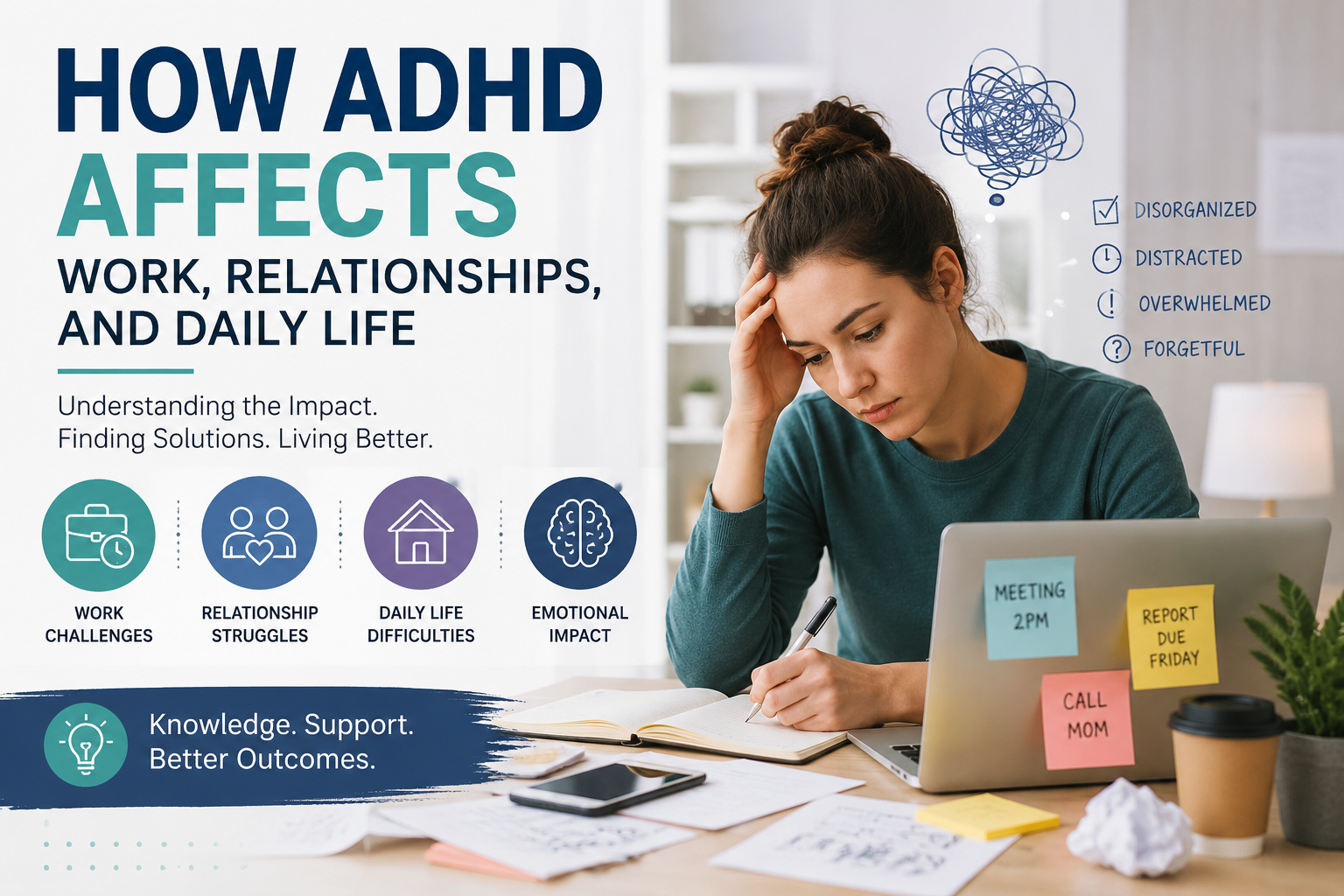
Understanding how ADHD affects different areas of life can help individuals recognize symptoms early and seek appropriate treatment and support.
Understanding ADHD Beyond Attention Problems
ADHD is a neurodevelopmental disorder that affects executive functioning skills. These skills help people plan, organize, focus, regulate emotions, and complete everyday tasks.
Executive functioning includes:
- Planning and prioritizing tasks
- Organization
- Time management
- Maintaining focus
- Emotional regulation
- Impulse control
Although ADHD is often associated with hyperactivity, many adults primarily experience symptoms related to inattention, forgetfulness, and executive functioning difficulties.
How ADHD Affects Work Performance
Many adults with ADHD are highly intelligent and capable, but they may struggle with maintaining consistency in professional settings.
Difficulty Staying Organized
Managing calendars, emails, paperwork, and multiple projects can become overwhelming. Important tasks may be forgotten or delayed without effective organizational systems.
Trouble Meeting Deadlines
Many people with ADHD experience time blindness, making it difficult to accurately estimate how long tasks will take. This often results in missed deadlines and last-minute stress.
Problems Maintaining Focus
Long meetings, repetitive work, or environments with frequent distractions can make it difficult to stay engaged and productive.
Increased Workplace Stress
Repeated mistakes, unfinished projects, and constant pressure to stay organized can contribute to anxiety, burnout, and reduced confidence.
Common Workplace Challenges
- Difficulty prioritizing tasks
- Missing deadlines
- Frequent procrastination
- Forgetting meetings or appointments
- Losing important documents
- Difficulty multitasking
Despite these challenges, many individuals with ADHD thrive in creative, entrepreneurial, fast-paced, or problem-solving careers.
How ADHD Impacts Personal Relationships
ADHD symptoms can influence communication, trust, emotional connection, and shared responsibilities with partners, family members, and friends.
Forgetfulness and Inattention
Forgetting birthdays, appointments, conversations, or commitments may unintentionally make loved ones feel ignored or unimportant.
Impulsive Communication
Some adults with ADHD may interrupt conversations, speak without thinking, or struggle to pause before responding during disagreements.
Difficulty Managing Shared Responsibilities
Household chores, finances, scheduling, and parenting responsibilities may become sources of conflict when executive functioning challenges interfere with consistency.
Emotional Sensitivity
Many people with ADHD experience strong emotional reactions or rejection-sensitive feelings that can make relationship conflicts feel more intense.
Relationship Challenges May Include
- Miscommunication
- Forgetting important events
- Difficulty listening during conversations
- Impulsive reactions during disagreements
- Uneven distribution of responsibilities
With appropriate treatment and open communication, many couples and families successfully improve these challenges.
Everyday Life with ADHD
Simple daily responsibilities often require significantly more mental effort for individuals living with ADHD.
Household Management
Cleaning, grocery shopping, paying bills, meal planning, and organizing living spaces may feel overwhelming when multiple tasks compete for attention.
Time Management Difficulties
Adults with ADHD commonly struggle to estimate time accurately, resulting in chronic lateness or incomplete tasks.
Common Daily Challenges
- Arriving late to appointments
- Forgetting scheduled events
- Misplacing personal belongings
- Starting multiple projects without finishing them
- Difficulty following routines
Mental Exhaustion
Constantly working to stay focused, organized, and productive can lead to emotional fatigue and chronic stress.
ADHD and Emotional Well-Being
Untreated ADHD may contribute to emotional and mental health concerns over time.
Anxiety
Persistent stress from missed deadlines, unfinished work, or daily disorganization may increase anxiety symptoms.
Depression
Repeated struggles and feelings of underachievement may contribute to depression or reduced motivation.
Low Self-Esteem
Years of criticism or frustration related to ADHD symptoms may negatively impact confidence and self-worth.
Because ADHD frequently coexists with anxiety or depression, a comprehensive evaluation by a qualified mental health professional is important for accurate diagnosis and treatment planning.
ADHD in Social Situations
Social interactions can also become challenging due to impulsivity and attention difficulties.
Common Social Challenges
- Interrupting conversations
- Losing focus while listening
- Forgetting social commitments
- Speaking impulsively
- Difficulty recognizing social cues
These behaviors are typically symptoms of ADHD rather than intentional actions.
Can ADHD Be Managed Successfully?
Yes. Many individuals with ADHD live productive, fulfilling lives with proper treatment and support.
Medication
Prescription medications may help improve attention, focus, impulse control, and executive functioning when recommended by a qualified healthcare provider.
Behavioral Therapy and ADHD Coaching
Cognitive Behavioral Therapy (CBT), ADHD coaching, and counseling can help individuals develop practical coping strategies and improve daily functioning.
Lifestyle Strategies
Healthy habits can complement professional treatment.
Helpful Daily Habits
- Using planners and digital reminders
- Breaking large tasks into smaller steps
- Creating structured daily routines
- Exercising regularly
- Getting consistent, quality sleep
- Reducing distractions while working
- Maintaining a balanced diet
When Should You Seek Professional Help?
Consider scheduling an ADHD evaluation if symptoms consistently interfere with your daily life.
You May Benefit from Professional Evaluation If You:
- Struggle to stay organized despite your best efforts
- Experience ongoing work or academic difficulties
- Have challenges maintaining healthy relationships
- Frequently feel overwhelmed or emotionally exhausted
- Notice symptoms affecting your quality of life
A qualified healthcare provider can perform a comprehensive assessment, determine whether ADHD is present, and recommend an individualized treatment plan.
Final Thoughts
ADHD affects much more than attention. It can influence careers, relationships, emotional health, and everyday responsibilities. However, with an accurate diagnosis, evidence-based treatment, and ongoing support, many individuals successfully manage their symptoms and lead productive, meaningful lives.
If ADHD symptoms are affecting your work, relationships, or daily functioning, seeking professional care is an important first step toward better mental health and long-term well-being.