Anxiety disorders are among the most common mental health conditions worldwide, affecting people of all ages. The good news is that anxiety is highly treatable. With early diagnosis, evidence-based treatment, and healthy coping strategies, many people experience significant improvement in their symptoms and quality of life.
What Is an Anxiety Disorder?
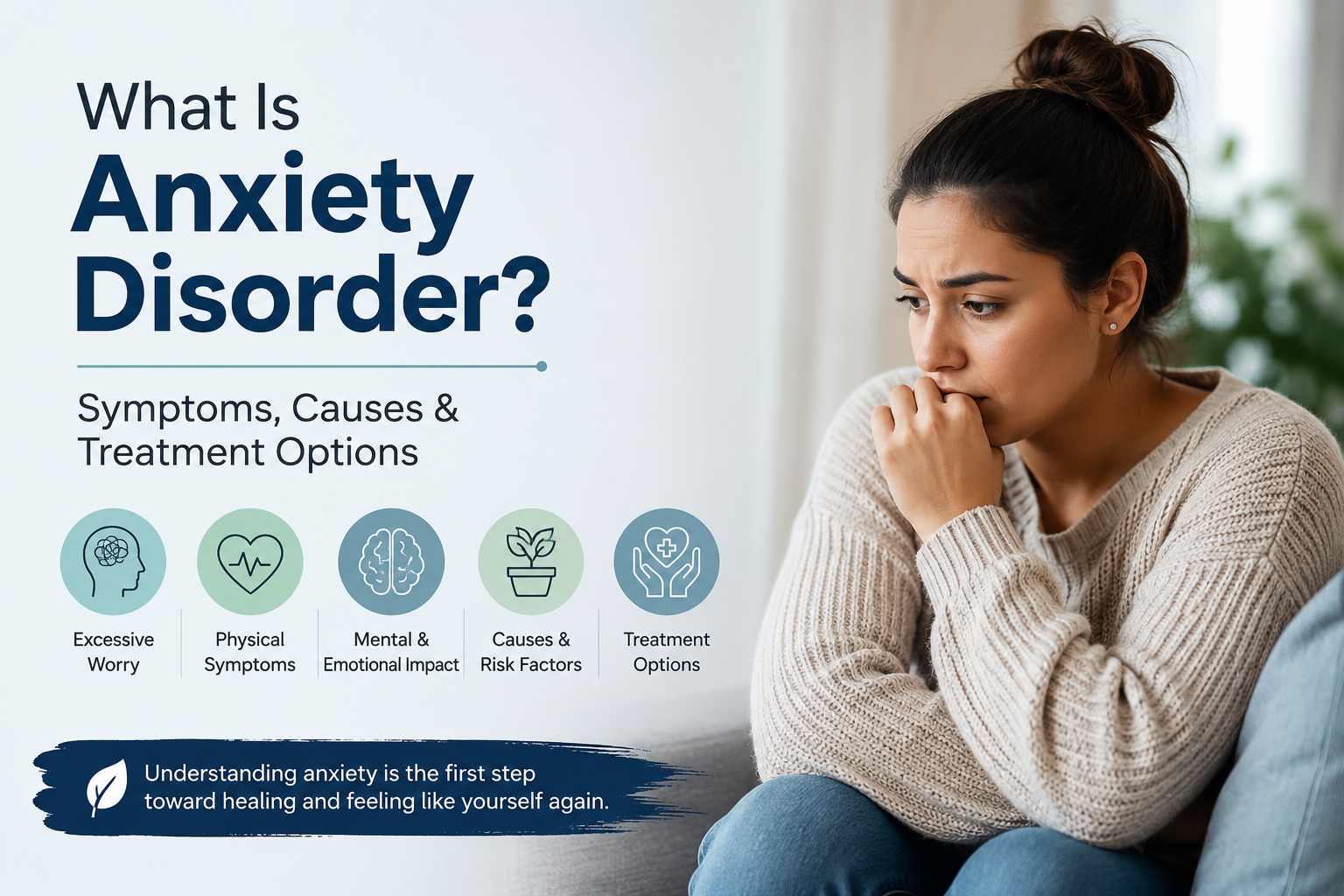
An anxiety disorder is a mental health condition characterized by excessive fear, worry, or nervousness that is difficult to control. Unlike temporary stress, anxiety disorders cause symptoms that persist for weeks or months and often interfere with work, school, relationships, and daily responsibilities.
Several types of anxiety disorders include:
- Generalized Anxiety Disorder (GAD)
- Panic Disorder
- Social Anxiety Disorder
- Specific Phobias
- Separation Anxiety Disorder
Each type has unique features, but all involve excessive anxiety that impacts everyday functioning.
Common Symptoms of Anxiety
Anxiety affects both the mind and body. Symptoms vary from person to person and may range from mild to severe.
Emotional Symptoms
You may experience:
- Constant worry or fear
- Feeling overwhelmed
- Difficulty relaxing
- Irritability
- Feeling restless or “on edge”
- Trouble concentrating
Physical Symptoms
Anxiety can also produce physical symptoms, including:
- Rapid heartbeat
- Shortness of breath
- Muscle tension
- Sweating
- Dizziness
- Nausea
- Fatigue
- Difficulty sleeping
Because these symptoms may resemble other medical conditions, it’s important to seek a professional evaluation rather than self-diagnose.
What Causes Anxiety?
There is no single cause of anxiety disorders. Research suggests that anxiety develops from a combination of biological, psychological, and environmental factors.
Possible contributing factors include:
- Family history of anxiety disorders
- Brain chemistry differences
- Chronic stress
- Trauma or adverse life experiences
- Certain medical conditions
- Substance use or withdrawal
Experiencing anxiety does not mean someone is weak or unable to cope. It is a recognized medical condition that deserves appropriate care.
Risk Factors
Some individuals may have a higher likelihood of developing anxiety disorders, including those who:
- Have a family history of anxiety or other mental health conditions
- Experienced childhood trauma
- Live with chronic medical conditions
- Face ongoing stress at work or home
- Have experienced major life changes
Recognizing these risk factors can help individuals seek support sooner.
When Should You Seek Professional Help?
Occasional anxiety is normal. However, professional care may be appropriate if symptoms:
- Occur most days for several weeks
- Interfere with work or school
- Affect relationships
- Cause sleep problems
- Lead to panic attacks
- Prevent participation in normal activities
A licensed mental health professional can determine whether your symptoms meet the criteria for an anxiety disorder and recommend appropriate treatment.
How Anxiety Is Diagnosed
There is no blood test or imaging study that diagnoses anxiety.
Instead, a qualified healthcare provider performs a comprehensive evaluation that may include:
- Medical history
- Mental health history
- Symptom assessment
- Physical examination when appropriate
- Screening questionnaires
- Evaluation for other medical or psychiatric conditions
This thorough assessment helps ensure an accurate diagnosis and personalized treatment plan.
Treatment Options for Anxiety
Effective treatment depends on symptom severity, personal preferences, and overall health.
Psychotherapy
Cognitive Behavioral Therapy (CBT) is considered one of the most effective treatments for anxiety disorders. It helps individuals recognize unhelpful thought patterns and develop healthier coping strategies.
Medication
Some individuals benefit from prescription medications that help regulate anxiety symptoms. Medication decisions should always be made in consultation with a qualified healthcare provider.
Lifestyle Changes
Healthy habits can complement professional treatment, including:
- Regular physical activity
- Adequate sleep
- Balanced nutrition
- Limiting caffeine and alcohol
- Mindfulness and relaxation exercises
- Stress management techniques
These strategies support overall mental wellness but should not replace professional treatment when symptoms are significant.
Living Well With Anxiety
Many people successfully manage anxiety through a combination of therapy, medication when appropriate, and healthy lifestyle habits. Learning about anxiety, building coping skills, and seeking support from trusted healthcare professionals can significantly improve quality of life.
Recovery looks different for everyone, and progress often occurs gradually. Consistent treatment and self-care can help reduce symptoms and restore confidence.
Final Thoughts
Anxiety disorders are common, treatable mental health conditions that affect millions of people. Recognizing the symptoms early and seeking professional care can prevent anxiety from becoming more disruptive over time.
If persistent anxiety is interfering with your daily life, speaking with a qualified mental health provider is an important first step toward finding relief and developing a personalized treatment plan.